Lanthier - Internal Medicine
- 0.0
- Rating
- 10.00K
- Installs
- Free
- Price

 Analysis by App-foxy
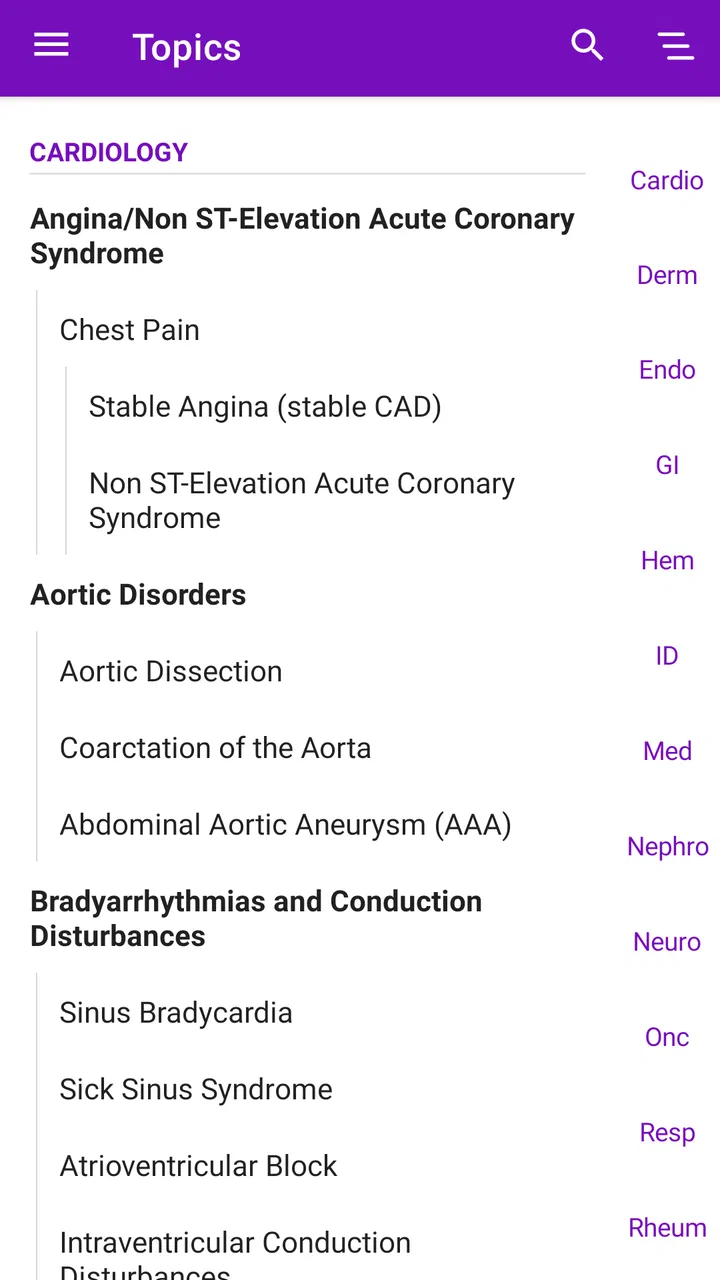
I approached Lanthier - Internal Medicine as a compact medical reference rather than as a general health app. Its purpose is practical: it brings the Lanthier internal medicine guide from Les Éditions Formed inc. into an app format for quick consultation. That distinction matters. This is not the kind of tool I would open for symptom-driven reassurance or a simplified explanation written for everyone. I see it as a study and reference companion for people who already understand medical vocabulary and want information arranged for repeated consultation.
The app is free to install, carries an Everyone 10+ content rating, and has passed the point where it feels like a brand-new release. It first appeared on July 9, 2018, and the current version is 4.4.11. The Android requirement is modest, with support beginning at version 5.0, so the software is aimed at a broad range of devices rather than only recent phones. There are optional in-app purchases priced at $18.99 per item, which is important to keep in mind before treating the free installation as the complete experience.
How the reference feels during quick and demanding sessions
When I use a specialist reference under time pressure, I pay attention to more than how quickly I can reach a topic: I also want to know whether I can pause, check my understanding, and resume without losing the thread. That makes short consultations useful only when I keep a clear question in mind. Next, I consider how the same focused approach holds up when a session becomes longer or more demanding.
You May Also Like

 Pandora - Music & Podcasts
Pandora’s Music Is Easy to Start, but Harder to Recover
Pandora’s strength is its low-effort path from a seed to a station. Its weak spot is how much confidence it asks you to place in connection, setup, and quiet recovery.

 8 Ball Pool
 Is Built on Rivalries, Rematches, and Routine
A close look at the rivalries, rematches, shared routines, and unanswered safety questions that turn a quick pool match into a persistent mobile community.

 Samsung Music
’s Quiet Strength Is Playing What You Already Own
Its reach comes less from spectacle than from dependable access to a personal library. That simplicity is both the app’s strongest retention engine and its ceiling.

 AccuWeather: Weather Radar
AccuWeather Review: A Quick, Clear Forecast for Everyday Decisions
For everyday plans, the best forecast is the one you can understand quickly. AccuWeather makes rain timing, radar, and local conditions easy to act on, with a few trade-offs.

 Hill Climb Racing
Why Hill Climb Racing Still Turns Crashes Into One More Run
A tiny car, a bumpy hill and one more upgrade: Hill Climb Racing keeps resurfacing because its simple chaos makes every near-miss feel personal.

 AliExpress - Shopping App
AliExpress Makes Global Shopping Feel Personal, but Shoppers Bear the Risk
AliExpress turns a global marketplace into a pocket-sized discovery engine. Its reach is useful, its shopping loop compelling, and its trade-offs easy to miss.
More From Our News Desk
View All News


Speed expectations when I need an answer quickly
My first expectation with a medical guide is not entertainment-style speed; it is a short path from opening the app to reaching the relevant subject. A reference tool earns its place when it reduces the time spent searching through a physical book or jumping between unrelated web pages. Lanthier is best understood through that lens. Its value comes from putting a focused internal medicine resource on a phone, where I can consult it during study, revision, or a quiet moment between tasks.
The experience should be approached as a deliberate reference workflow. I would not expect the app to replace clinical reasoning, and I would not use it as a shortcut around patient assessment. Instead, I would use it to refresh a topic, check the structure of a condition, or return to a passage I had already studied. That makes the perceived speed depend partly on how familiar I am with the guide. Someone who knows the organization will reach useful material more quickly than a first-time reader who is still learning where each subject sits.
One practical habit makes a noticeable difference: I would search with the medical concept I actually need rather than typing a full question in everyday language. A professional reference is usually more efficient with a disease name, syndrome, investigation, or treatment topic than with a sentence such as “Why does this patient feel tired?” That approach also keeps the app in its proper role. It is a guide for informed consultation, not a conversational diagnostic assistant.
The free entry point is useful for deciding whether the reading style and organization suit me before spending anything. I would take time to explore the accessible material, test how naturally I can move between topics, and only then consider an optional item. The price of $18.99 per item is significant enough that a student or occasional reader should think about how often the guide will actually be used. For frequent study, a focused reference can justify that cost; for a person who only wants general health information, it is probably the wrong purchase.
What happens during heavy-use moments
The most demanding situation is not necessarily a single long reading session. It is repeated consultation: opening the guide, checking one subject, moving to another, and returning later while studying. That pattern is common with internal medicine material because one topic often leads to another. A symptom may prompt a review of differential diagnoses, which then leads to an investigation or management section. The app’s usefulness is therefore tied to how comfortably it supports short bursts as well as longer revision periods.
I would use it in a realistic everyday scenario like this: after a lecture, I might sit on public transport and review a topic while making brief notes elsewhere. Later, before a study session, I could reopen the same reference to rebuild the outline in my head. In that situation, the app is more valuable than carrying a large textbook, especially when I only need a targeted reminder. Its small-screen format favors focused checks over broad reading, so I would not expect it to replace a full study desk with several sources open at once.
For heavier sessions, I would avoid treating the phone as the only place where I organize information. A better workflow is to use Lanthier for the reference text and keep personal notes, lecture material, or formal guidelines beside it. That separation helps prevent a common mistake: confusing a concise guide with a complete decision-making system. The app can support revision, but it should not be the sole basis for a high-stakes clinical action.
Another useful trade-off is portability versus context. A phone is available in more places than a printed book, but the smaller display can make dense medical reading less comfortable. I would use it for a five-minute check, a commute, or a quick reminder, then move to a larger screen or print source when I need to compare several sections carefully. That is not a weakness unique to this title; it is the practical limit of putting a substantial medical guide into a handheld format.
Reliability and the role it should play
Reliability here has two meanings. The first is whether the app remains a dependable way to reach its reference material. The second is whether I can rely on a medical guide as the final authority for a patient. I would separate those questions very clearly. Even when an app is convenient and professionally oriented, medical practice changes, local protocols differ, and individual patients do not always fit a concise reference entry.
Because the developer is Les Éditions Formed inc., the app presents itself as an editorial medical resource rather than a crowd-sourced discussion space. That gives it a more defined purpose than a random collection of online answers. Still, I would verify important decisions against current institutional guidance, prescribing information, and supervision appropriate to my role. The app is strongest as a companion for learning and orientation, not as permission to act beyond my training.
I also appreciate that a medical reference can be reliable in a narrower, more useful way: it can help me remember what I already learned. Before an exam or a teaching discussion, a concise guide may expose gaps in my recall. I can notice that I remember the headline diagnosis but not the distinctions that separate similar conditions. That makes the app valuable as a prompt for deeper study, provided I treat the prompt as a starting point rather than a complete answer.
When I judge stability, I look for whether the app fits naturally into repeated use without becoming a source of distraction. The current version, 4.4.11, suggests an established product rather than an untouched first build. I would still keep a second reference available for important work, not because this particular app should be assumed unreliable, but because redundancy is sensible in medical study and practice. A single mobile guide should never be the only route to information when the consequences of an error are serious.
Device constraints and who will notice them
The minimum Android requirement of 5.0 makes the app accessible to owners of older phones, which is helpful for students or professionals who do not upgrade frequently. At the same time, support for older operating systems does not guarantee that every device will feel equally comfortable. Screen size, text rendering, storage space, and general responsiveness can shape the experience more than the app’s medical content does.
On a smaller phone, I would expect to spend more time scrolling and repositioning my attention. That is manageable for a single definition or short review, but less pleasant when I want to read a long passage without interruption. A larger phone or tablet should be a better fit for extended sessions, while an older handset may be perfectly adequate for occasional consultation if the reader is patient with the interface.
Resource demands also need a realistic interpretation. A reference app is not competing with a three-dimensional game for graphics performance, so I would not choose it based on gaming-style hardware. The more relevant question is whether my phone can keep a medical reading session comfortable. If the device already struggles with ordinary apps, switching between the guide and note-taking tools may feel less smooth. Closing unused apps and keeping the study workflow simple is a sensible way to reduce friction without expecting the guide itself to solve device limitations.
Storage and connectivity are practical questions I would consider before depending on it away from home. I would install and explore the app in advance, then check how well my normal study routine works in the places where I expect to use it. Rather than assume that every reference behaves like a fully offline book, I would test the exact sections and functions I need before relying on it during travel, a placement, or an exam-preparation session.
Recovery after interruptions
Medical study rarely happens in a perfectly controlled environment. A call arrives, the screen locks, the battery runs low, or I switch to another app to write a note. Recovery is therefore part of the experience. My preferred approach is to use short, intentional reading blocks and leave myself a simple reminder of the topic I was reviewing. That way, even if the phone interrupts me, I can return without reconstructing the entire purpose of the session.
This is also where the app’s focused nature helps. If I am using it for one subject at a time, returning after an interruption is less demanding than recovering a sprawling web search with many unrelated tabs. I would still avoid assuming that every reading position or search state will always be preserved exactly as I left it. For important revision, I would note the chapter or topic externally, especially when moving between devices or applications.
A useful recovery routine is to finish each consultation by writing one line about what I learned and one question that remains. The first line makes the next session easier to restart; the second prevents the app from creating a false sense of completeness. This small habit turns a passive reference visit into active study and is particularly helpful when the guide is used in short intervals throughout the day.
Who should use it, and who should choose something else?
I think Lanthier is a good match for medical students, trainees, and health professionals who want a focused internal medicine guide close at hand. It may also suit readers who already know the basics and prefer a structured medical reference over broad internet searches. The free installation lowers the barrier to trying the format, while the optional purchases let users decide whether the available material is worth expanding for their own routine.
I would not recommend it as a first choice for someone looking for plain-language explanations of personal symptoms. The age rating of Everyone 10+ describes who can access the app, not whether the content is designed for self-diagnosis. A general health website, a patient education service, or a conversation with a qualified clinician would be more appropriate for that purpose. Likewise, a beginner who has not yet learned core medical terminology may find a specialist guide demanding rather than helpful.
It is also not the best option for someone who needs a constantly updated clinical decision system, local prescribing rules, or a broad library covering every medical specialty. In those cases, a current institutional resource, a comprehensive professional database, or a formal textbook collection may offer better depth and context. Lanthier makes more sense when the goal is a portable, focused companion rather than an all-in-one clinical platform.
My performance verdict after fitting it into a routine
My overall impression is that this app succeeds when I keep the task narrow: open the internal medicine guide, find a relevant subject, refresh my understanding, and return to my own notes or primary sources. Its perceived performance is strongest in quick reference moments, where portability matters more than a large reading surface. It is less convincing as the sole tool for extended study, complex comparison, or high-stakes decisions.
The combination of a long-supported Android baseline, an established current version, and a medical focus gives it a practical place in a student or clinician’s toolkit. The main friction is not that it tries to do too much; it is that a focused guide naturally has boundaries. Optional purchases also mean I would inspect the accessible content before committing to anything further, particularly if I only consult medical references occasionally.
My recommendation is conditional but positive: try it if you want a portable Lanthier internal medicine reference and already have the background to interpret specialist material. Use it alongside current guidance, formal teaching, and clinical supervision rather than in place of them. If that matches your needs, the app can make short study and revision sessions more convenient. If you want personal symptom advice, extensive multimedia learning, or a complete clinical information system, I would choose a different kind of resource instead.
In the end, I see this as a practical medical reference with a clear audience. It does not need to behave like a general-purpose health app to be useful. Its best quality is the ability to bring a focused guide into the moments when carrying a full book or searching the open web feels excessive. Used with realistic expectations, it is a sensible companion for internal medicine study and quick review.
FAQs for Lanthier - Internal Medicine
01What is Lanthier - Internal Medicine used for?
Lanthier - Internal Medicine is designed as a medical reference and learning resource focused on internal medicine. It may help students, healthcare professionals, and other medically oriented users review clinical information, organize study material, and consult relevant topics more conveniently from a mobile device. It should support education and reference—not replace professional diagnosis, treatment decisions, or advice from a qualified clinician.
02Who can benefit from downloading Lanthier - Internal Medicine?
The app is likely to be most useful for medical students, interns, residents, physicians, and healthcare workers who want quick access to internal-medicine content. Its usefulness depends on the depth, organization, and update frequency of the material included in the current version. General users may find some topics difficult to interpret, so medical terminology and clinical recommendations should be reviewed with a qualified professional when necessary.
03Is the information in Lanthier - Internal Medicine reliable and up to date?
Users should check the app’s listed sources, authorship, update date, and version history before relying on its information. Medical knowledge changes regularly, and a mobile reference may not include the newest guidelines, regional recommendations, or patient-specific considerations. Treat the app as a supplementary educational tool, and confirm important clinical information through current official guidelines, peer-reviewed sources, or institutional protocols.
04Can Lanthier - Internal Medicine be used to diagnose or treat a patient?
No. Lanthier - Internal Medicine should not be used as a substitute for a medical consultation, physical examination, laboratory testing, or professional clinical judgment. Symptoms can have different causes, and information presented in a reference app may not apply to a particular person. Anyone experiencing concerning or worsening symptoms should contact a healthcare professional or emergency service instead of relying solely on the application.
05Does Lanthier - Internal Medicine require an internet connection or include paid features?
The exact access requirements may vary according to the app version and the developer’s distribution model. Before downloading, review the Google Play Store or App Store listing for information about offline availability, account requirements, advertising, subscriptions, in-app purchases, and supported devices. Checking these details in advance can help you understand whether all content is available immediately or whether certain features require payment or connectivity.
Pros
- Focused on internal medicine topics for targeted clinical learning.
- Useful reference for reviewing symptoms
- diagnoses
- and treatment concepts.
- May support quick study sessions between appointments or classes.
- Organized medical content can make complex subjects easier to revisit.
- Suitable for learners seeking a specialized rather than general health app.
Cons
- Content may require prior medical knowledge to understand fully.
- Not a substitute for professional diagnosis or patient-specific medical advice.
- Coverage may feel limited outside internal medicine specialties.
- Medical information should be checked against current clinical guidelines.
- Some users may find the interface or navigation less intuitive at first.

Lanthier - Internal Medicine
Gallery